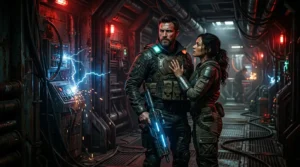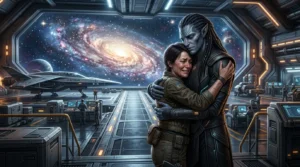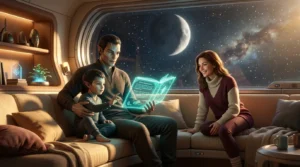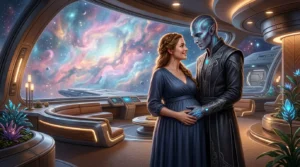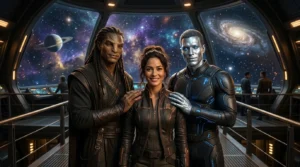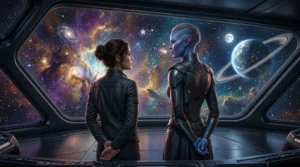
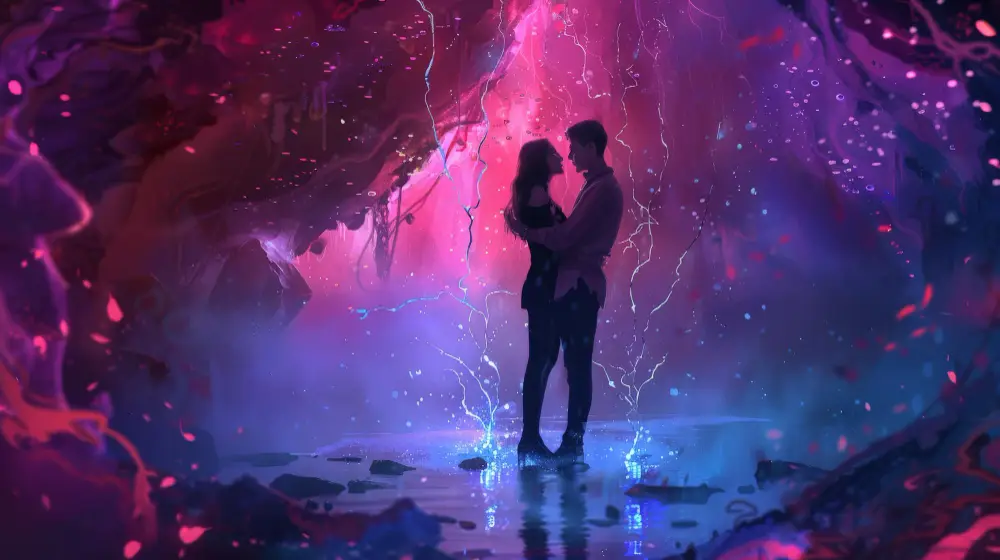
Some of the best sci-fi romance reads of the last few years have not been about warriors or pilots. They’ve been about the men behind the consoles. The coders, the engineers, the AI architects whose hands shape the future without ever holding a weapon. The futuristic tech romance novel has found its second wind because readers are starting to figure out what writers have known for a while. The smartest man in the room is sometimes the most dangerous, and the most worth falling for.
The Tech Hero Is Not Who You Think
When people hear “tech hero” they picture a guy in a hoodie eating cold pizza in a basement. That stereotype died years ago. The modern futuristic tech romance novel writes its men as something else entirely. They run companies that could end wars. They build software that governments are afraid of. They’ve made more money by twenty-five than most empires earn in a generation, and they still have time to notice when the heroine takes her coffee black.
Brains as the New Brawn
Readers in 2026 are tired of muscle for the sake of muscle. They want a hero who can outthink the villain, not just outpunch him. The man at the keyboard, building neural networks while the rest of the cast is shooting at things, becomes the most powerful person on the page. His mind is the weapon, and watching him use it is its own kind of attraction.
Quiet Confidence Reads as Sexier Than Swagger
The loud hero is yesterday’s archetype. The new tech hero is calm. He doesn’t have to raise his voice because he already knows three steps ahead what is going to happen. When he tells the villain to walk away, the villain walks away. That kind of confidence lands harder than any sword fight ever could.
Why the Heroine Falling for Him Hits Different
The romance arc in a futuristic tech romance novel has its own pacing. He doesn’t sweep her off her feet. He earns her attention one conversation at a time. She comes to him with a problem, he solves it, and along the way she realizes the man across the table is the smartest person she’s ever met. That realization is the slow burn in a way no glance across a ballroom can match.
Connection Before Chemistry
These books build the relationship on conversation first. He explains how his algorithm works. She asks better questions than he expected. He stops and looks at her like he’s seeing her for the first time. The intellectual respect comes before the physical pull, and that order of operations is what makes the eventual kiss land like a thunderclap.
When Code Becomes Foreplay
A scene where the hero teaches the heroine how to write a piece of software should not be hot, and yet authors are writing those scenes and readers are buying them by the thousands. The reason is simple. Watching someone be excellent at something they care about is attractive. Watching them share that excellence with you is more so.
The Tension of the Man Who Sees Everything
A tech hero in a sci-fi setting has access to information no one else has. He can read security feeds. He can predict the heroine’s movements before she makes them. That asymmetry is dangerous in the wrong hands, but in the right ones it becomes one of the most romantic elements in the genre.
Surveillance as Devotion
When the hero has been quietly watching out for the heroine for months before they meet, the reader gets a hit of romance that nothing else in fiction delivers quite the same way. He has known about her. He has been making her life easier in ways she hasn’t noticed. The reveal of that protection lands like a love letter she didn’t know was being written.
The Line Between Care & Control
Good authors handle this carefully. The hero who watches her is never the hero who controls her. The futuristic tech romance novel that gets it right makes the heroine the one who decides what to do with the information once she finds out. Her agency stays intact. His care is real but never owns her.
Why This Subgenre Is Growing in 2026
The world is more wired every year. Readers are surrounded by technology in every part of their lives. A romance set inside that world feels more real to them than any historical fantasy could. They want stories that reflect the future they’re actually living in, with heroes who shape it instead of fight against it.
Worldbuilding That Reflects the Present
The best of these books extrapolate from where we already are. The hero is using tools that feel five years out, not five hundred. The heroine works in a field that exists today. The romance is set in a workplace that resembles the reader’s own, just with more glass walls and better lighting. That recognizability is half the appeal.
What the Next Wave Looks Like
The futuristic tech romance novel is splitting into subgenres as the audience grows. AI heroines falling for human men. Human heroines falling for partly cybernetic heroes. Coders, hackers, system architects, engineers, all getting their own dedicated reader base. The category is expanding because the readers keep showing up, and the authors are responding by getting more specific with their hooks. The mind behind the machine is the hero of the decade. The genre is just catching up to what the reader already knew.