
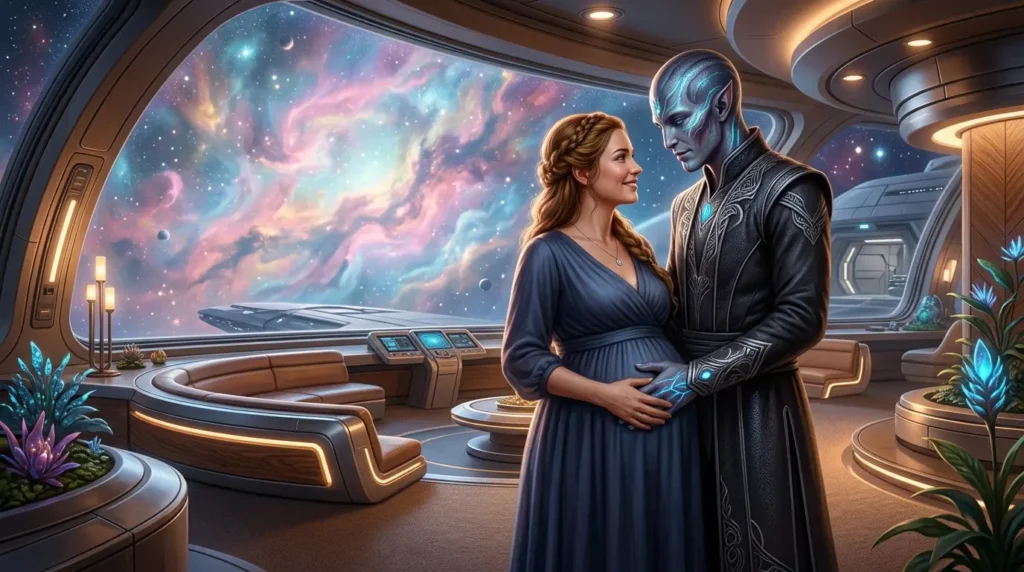
Alien pregnancy is one of those tropes in sci-fi romance that readers either love or hate, and there is not much in between. For the readers who love it, the trope delivers some of the highest emotional stakes the genre can offer. For the readers who do not, it can feel forced or uncomfortable when it is handled poorly. Either way, the trope keeps showing up in new books year after year, and there are specific reasons it refuses to fade out.
Why the Alien Pregnancy Trope Keeps Coming Back
The trope has been part of alien romance almost since the subgenre existed. The reasons it holds on come down to what the trope does for the story.
The Emotional Stakes Are Off the Charts
A pregnancy raises the stakes of any romance faster than almost anything else a writer can do. In alien romance, a pregnancy raises them even higher. Now the heroine is not just falling for someone from another species. She is carrying a life that shares blood between the two of them. Every scene from that point on carries the weight of what happens next. The reader is invested in a way that goes past the love story.
It Solves a Story Problem for the Writer
The trope also solves a plot problem writers often run into. Writers often struggle to keep the emotional intensity of the first half of a romance going once the leads are together. A pregnancy is one answer. It changes the direction of the relationship, forces new conversations, and pushes the couple into a whole new phase of their story. Some writers use it to power the second half of a book. Others use it to bridge into the sequel.
The Continuity Angle for Series Writers
Alien pregnancy also gives series writers a way to carry connections forward. The child of book one becomes a supporting character in book five. The family tree grows across the universe. Readers who love long-running series get to watch a real generation unfold.
What Makes These Storylines Actually Work
Not every alien pregnancy storyline lands. Some fall flat because the writer treats the heroine as a plot device rather than as a person. The good ones share a few habits.
The Heroine Has to Be a Real Person, Not a Vessel
The single biggest mistake in alien pregnancy romance is treating the heroine as an incubator. If her only role after finding out she is pregnant is to carry the child, the story falls apart. She has to keep her voice, her fears, her preferences, and her sense of self. The best books let her wrestle with what the pregnancy means for her life, for her plans, and for who she thought she was going to be. The pregnancy changes her, but it does not erase her.
The Hero Has to Reckon With What He Did
The hero of an alien pregnancy romance cannot just be delighted. He has to sit with the reality of what happened. He crossed species lines. He created something that neither of them fully anticipated. His response has to include something more than joy. The good books let him wrestle with fear, guilt, or the weight of responsibility along with the love he feels. That emotional honesty is what separates a memorable alien pregnancy storyline from a forgettable one.
Common Setups in Alien Pregnancy Romance
The trope shows up in a few reliable structures across the subgenre.
The Surprise After a Slow Burn
The couple has been together for most of the book. The pregnancy is a surprise that lands in the last third or in the opening of a sequel. This version of the trope works because the reader has already fallen for the couple, and the pregnancy raises the stakes just when the story needs a new engine.
The Fated Mate Bond That Requires a Child
Some alien species in these books have biological bonds that either produce or demand a child as part of the bonding process. The pregnancy is not accidental. It is part of what the fated bond means for that species. This setup gives the trope cosmic weight and removes the question of intent, because the biology answers it.
The Species Survival Setup
The alien species is dying out. The human heroine is one of the only people who can produce a viable child with the hero. The pregnancy is loaded with the future of a whole people, not just the future of the couple. This setup is one of the older versions of the trope and it still works when the writer handles the political and personal weight of it carefully.
Where the Trope Can Go Wrong
The alien pregnancy trope goes wrong when the heroine loses her agency, when the hero is oddly detached from the situation, or when the story treats the pregnancy as a shortcut to intimacy the couple has not earned. Readers who love the trope have gotten good at spotting these failures fast. Books that avoid them tend to build long-term readers.
Where to Start With Alien Pregnancy Romance
If you are curious about the trope but you have never read one, look for books where the pregnancy comes in past the halfway mark rather than being announced in chapter one. The pregnancy hits harder when the reader has already fallen for the couple. Also look for books where reviews praise the heroine’s arc as much as the hero’s, because that is a sign the writer treated her as a full person and not as a means to a plot point.
The Lasting Appeal of the Alien Pregnancy Trope
The alien pregnancy trope is not for every reader, and that is fine. For the readers who love it, though, it delivers a specific emotional experience that few other tropes can match. The stakes are high. The bond is deeper. The story has somewhere real to go. When it is written well, it becomes one of the most memorable corners of sci-fi romance, and it explains why the trope keeps coming back no matter what other tropes are trending at the moment.